Before your arrival
Make sure you have the right documents before arriving in Italy. Requirements depend on your nationality and how long you plan to stay.

EU Citizens
To enter Italy, it is sufficient to have a valid passport or identity card for travel abroad. No visa is required for EU citizens.
Length of stay and requirements
EU citizens can travel and stay freely in all countries within the Schengen Area. Depending on the length of stay, different procedures apply:
- Stay shorter than 90 days: You can stay in Italy for up to three months without any additional bureaucratic formalities, as long as you have a valid travel document.
- Stay longer than 90 days: If you wish to stay in Italy for more than three months, you must register at the Registry Office (Anagrafe) of your municipality of residence, either as a temporary or permanent resident.
Non EU-Citizens
To enter Italy, it is necessary to have a valid passport (or equivalent travel document) and an entry visa (for work, study, etc.).
VISA
Non-EU citizens must obtain a visa before arriving in Italy, depending on the purpose of their stay. The visa must be requested at the Italian embassy or consulate in the applicant’s country of origin or legal residence.
A visa allows entry in Italy but not stays longer than 3 months. For longer stays, a residence permit must be requested within 8 days of arrival.
Foreign nationals already residing in a Schengen country and holding a valid residence permit are exempt from a visa for stays of up to 90 days within a 180-day period
Types of visas include:
Study/Training Visa: this visa is valid for the entire duration of the course to be attended in Italy. It can be requested by foreign citizens who wish to enroll in higher education programs such as universities, ITS institutes, AFAM (Higher Education in Arts and Music), postgraduate courses, or PhDs, as well as short training courses (e.g., international exchange programs). Each university sets a yearly quota for international students. Admission is subject to availability and, where required, passing entrance exams. To access university studies in Italy, Italian diplomatic or consular authorities issue declarations recognizing foreign qualifications and provide information about the grading system of the country of origin and the equivalence of grades.
Research Visa: for researchers who present a hosting agreement with public or private research institutions recognized by the Ministry of Education, University and Research. Applicants must hold academic qualifications that allow access to a PhD in their country of origin.
Subordinate Employment Visa: for permanent, fixed-term, or seasonal employment. It can only be obtained after receiving work authorization (nulla osta) from the Immigration One-Stop Shop (Sportello Unico per l’Immigrazione – SUI).
Self-Employment Visa: this can be requested to:
• Carry out non-occasional self-employed work of an industrial, professional, artisan, or commercial nature in Italy
• Establish a company (corporation or partnership)
• Hold corporate positions
To obtain it, applicants must meet the professional and legal requirements established by Italian law for citizens performing the same activity.
Learn more on Public Relations Office (URP): Entering Italy
Declaring hospitality
Anyone hosting a non-EU citizen must, within 48 hours, complete the form “Declaration of property transfer or hospitality” (Comunicazione di cessione fabbricato o ospitalità), providing the guest’s passport or identification document and the rental contract code.
Failure to declare guests may result in a fine ranging from €160 to €1,100.
Learn more on poliziadistato.it (in italian)
Your first steps in Italy
After arriving in Italy, there are a few important steps you’ll need to take to get settled and start accessing essential services.
Residence permit
Non-EU citizens planning to stay in Italy for more than 90 days must apply for a residence permit within 8 days of arrival.
This document allows you to legally stay in Italy for a limited period and is required for many other administrative procedures. The duration of the residence permit corresponds to that of the entry visa.
There are different types of residence permits, each type has specific requirements, as well as different rights and limitations:
- Study permit
- Subordinate employment permit
- Self-employment permit
- Job-seeking permit
Residence Permit in 7 Steps
1) GET THE KIT
Go to a post office with “Sportello Amico”(check the official list to locate one) or visit our info desk. Ask for the Residence Permit Kit (Yellow Kit).
2) PREPARE DOCUMENTS
Make copies of the following documents: all pages of your passport, supporting documents (such as a university enrollment certificate or employment contract) and a valid health insurance policy.
3) PURCHASE THE REVENUE STAMP:
At any tobacconist shop displaying a “T” sign, purchase a €16.00 revenue stamp (marca da bollo). This stamp must be attached to your application.
4) SUBMIT THE KIT AT THE POST OFFICE:
Return to a post office with “Sportello Amico” to submit the completed kit forms, the prepared documents, and the €16 revenue stamp. Fees to pay: €70.46 (residence permit) €30 (postal service).
5) RECEIVE YOUR QUESTURA APPOINTMENT:
After submitting the kit, you will receive an appointment notice for the Questura in Piacenza (Viale Malta), usually a few months after submission.
6) WAIT FOR YOUR RESIDENCE PERMIT:
The processing of the residence permit can take a few weeks. You can track the status of your application online through the immigration portal.
7) PICK UP YOUR RESIDENCE PERMIT
Once your permit is ready, you will be notified to pick it up at the Questura in Piacenza.
Support and assistance throughout the residence permit process are available through the Piacenza Talenti Info Desk, local patronage offices, and similar services.
RESIDENCE PERMIT RENEWAL
The residence permit renewal must be requested at the Police Headquarters (Questura) responsible for the province of residence at least 60 days before its expiry date, in order to verify that all required conditions are still met.
CONVERSION FROM STUDY TO WORK PERMIT
International students holding a study residence permit are allowed to work up to 20 hours per week. It is possible to request a conversion from a study residence permit to a work permit, either if you already have a job or if you are still looking for one.
Requirements and timing:
- The conversion request can be submitted before completing your studies if the permit was issued for university courses (bachelor’s, master’s, PhD) or for individuals who obtained their permit upon reaching legal age in Italy.
- For permits issued for training courses or internships, conversion is only possible after completion of the course or internship.
- The request can be submitted at any time during the year, as long as the residence permit is still valid. Delays in submission, under certain conditions, do not result in the loss of the right to convert.
Types of conversion:
- To a subordinate employment permit: a job offer must be attached, including details such as employer, type of contract, job level, duties, working hours (more than 20 hours per week), and workplace.
- To a self-employment permit: you must demonstrate that you meet the legal requirements, including the minimum income threshold and, if required, registration with the Chamber of Commerce.
- To a job-seeking permit: this permit is valid for 9 to 12 months and allows you to look for a job or start an activity related to your field of study. You must register with the Employment Centre (Centro per l’Impiego) to declare your availability for work and submit the required documents. You may start working even with the receipt of the application, exceeding the 20-hour weekly limit of the study permit.
The conversion request must be submitted online through the Ministry of the Interior’s portal, which forwards it to the Immigration One-Stop Shop (Sportello Unico per l’Immigrazione) of your province of residence.
For more information: Residence permit conversion from study to work
Tax code
The Italian tax code (Codice Fiscale) is a 16-character alphanumeric code used to identify individuals in all dealings with Italian authorities and public administrations.
It is required if you want to work, open a bank account, obtain an Italian phone number, subscribe to public transport services and in general for any activity involving the signing of a contract.
The Codice Fiscale is free of charge and must be requested at the Revenue Agency in your place of residence.
You need to bring your passport with you. If you are a non-EU citizen, you may also be asked to show the receipt of your residence permit application.
Registering your address
Residence registration means registering with the Registry Office (Anagrafe) of an Italian municipality. It is mandatory for all foreign citizens who plan to stay in Italy for more than 3 months.
You can apply for residence at your municipality’s Registry Office (Anagrafe) or online by following the instructions available on the Municipality of Piacenza website. Try to book an appointment as soon as you arrive in Italy, waiting lists can be long.
When submitting your residence declaration, you will be asked to provide:
ID card, passport, or a valid travel document
- Tax code (Codice Fiscale)
- Rental contract or declaration of hospitality
- Receipt of the residence permit application or the permit itself (only for non-EU citizens)
In addition:
- If you are moving for work: Documentation proving your employment status (employed or self-employed)
- If you are moving for study and are not working:
- Certificate of enrollment at an educational institution,
- self-declaration of sufficient financial resources
- health insurance covering risks in Italy, valid for at least one year or for the duration of your studies (the European Health Insurance Card is not sufficient)
Please note that registering as a full-time resident in Italy may result in losing your residency status in your country of origin.
Healthcare Services
In Italy, healthcare is provided by the National Health Service (Servizio Sanitario Nazionale – SSN), which offers medical care through public facilities or accredited private providers.
THE ITALIAN HEALTHCARE SYSTEM
All individuals registered with the National Health Service (SSN) receive a health card, which is personal and used to access healthcare services such as medical visits, tests, and hospital care. At the time of registration, you choose a general practitioner (family doctor).
Enrolling in the SSN is strongly recommended, as it allows you to access the same services as Italian citizens.
With SSN registration, you are entitled to:
- Hospital care in public or affiliated facilities
- Access to out-of-hours medical services (guardia medica)
- Reduced fees or exemptions for certain conditions
In some cases, registration in the SSN is mandatory and free; in others, it is voluntary and subject to a fee, depending on your situation.
HEALTHCARE AGREEMENTS AND ACCESS
1) EU Citizens and Associated Countries
If you come from a European Union country or an associated country (such as Iceland, Liechtenstein, Norway, the United Kingdom, or Switzerland):
• Stays up to 3 months: you can use the European Health Insurance Card (EHIC/TEAM) to access necessary healthcare.
• Stays longer than 3 months: the EHIC only covers necessary medical care. For full healthcare coverage in Italy, EU citizens must request the S1 form in their home country. If you do not have EHIC or S1, you must choose one of the following:
Private health insurance (check carefully what is covered);
Registration with the SSN (mandatory and free for workers; voluntary and paid for students or others not eligible for free registration).
2) Citizens of Countries with Bilateral Agreements
If you come from a country with a specific healthcare agreement with Italy (such as Argentina, Australia, Brazil, Cape Verde, Tunisia, Serbia, Montenegro, Bosnia and Herzegovina, North Macedonia, San Marino, or Monaco):
• Short stays: you must obtain a certificate issued by your home country to access healthcare services under agreed conditions.
• Longer stays: coverage may be limited, and you may need to register with the SSN (mandatory and free for workers; voluntary and paid for students or others not eligible for free registration) or take out additional insurance.
3) Non-EU Citizens without Agreements
• Stays up to 3 months: you can access urgent and elective healthcare services by paying the applicable regional fees. Registration with the SSN is not required, except for students and au pairs.
• Stays longer than 3 months: you must have healthcare coverage by choosing one of the following:
Private health insurance (check carefully what is covered);
Registration with the SSN (mandatory and free for workers; voluntary and paid for students or others not eligible for free registration).
Health insurance is required to apply for a residence permit, and the tax code (Codice Fiscale) is essential to register with the National Health Service (SSN).
REGISTRATION AND PROCEDURES
Depending on your country of origin and the type of residence permit, registration with the SSN can be mandatory and free or voluntary. Voluntary registration requires the payment of an annual contribution (from 1 January to 31 December) and can be extended to dependent family members.
The health card has the same validity as the residence permit: therefore, it is necessary to renew the residence permit before renewing the health card.
To register with the SSN, you must present the following documents:
- Valid residence permit or receipt of the residence permit application (only for non-EU citizens)
- Identity document
- Tax code (Codice Fiscale)
- Document certifying residence or self-declaration of address
- Depending on the type of residence permit, additional documents may be required.
Registration with the National Health Service (SSN) is carried out by appointment at the Single Booking Centre (Sportello Unico–CUP).
Municipal ID
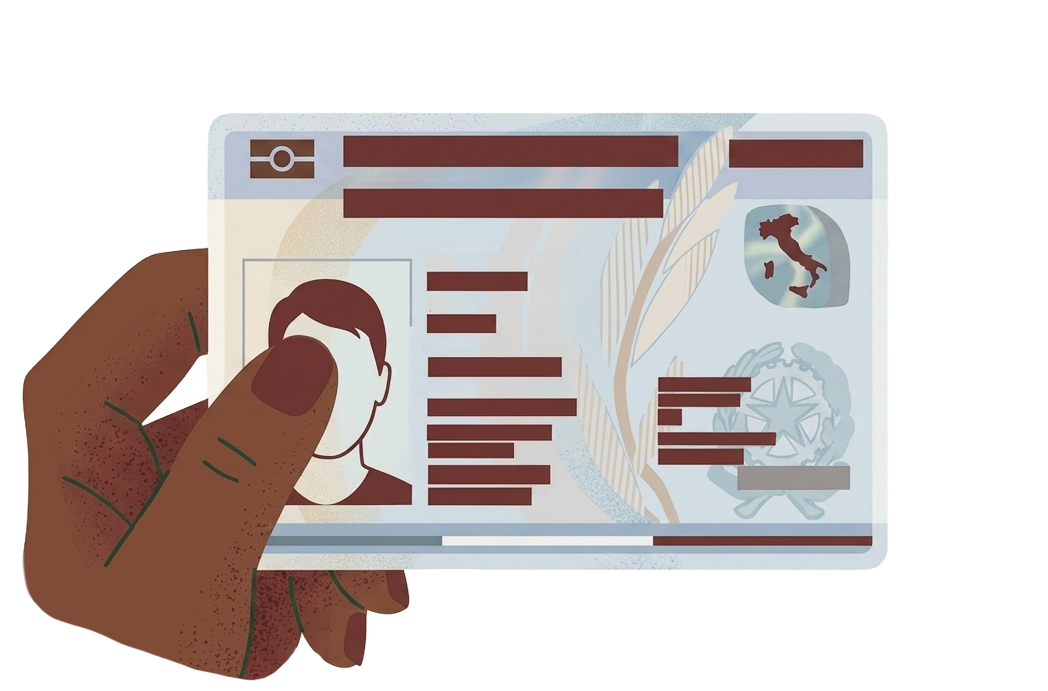
The Electronic Identity Card (CIE) is a personal identification document issued by the municipality of residence.
It is an electronic-format document, mandatory for all citizens (both minors and adults) who are registered in the Population Register (Anagrafe della Popolazione Residente).
The cost of the Electronic Identity Card is €22.20, to be paid at the time of the appointment (in cash or by card).
Citizens can access online public administration services by activating CIE credentials using the PIN and PUK codes associated with the card.
The CIE is usually requested at the municipality of residence. In Piacenza, the CIE is issued by the Quic multi-service counters by appointment only.
For information and appointments: Comune di Piacenza | Carta d’identità
Digital Identity (SPID)
SPID (Public Digital Identity System) is a digital identity (username and password) that allows all citizens to access online public administration services, together with the CIE.
To obtain SPID credentials, you must apply through one of the certified Identity Providers (full list available on spid.gov.it)
At the Municipality of Piacenza service counters, you can obtain personal SPID credentials through the LepidaID service, part of the Digital Agenda of the Emilia-Romagna Region.
SPID ACTIVATION PROCESS
01 Prepare the following: email address, mobile phone number you regularly use, valid identity document (ID card, passport, or driving licence), health card or tax code;
02 Register on the Lepida website;
02 Book an appointment at the Quic office (Via Beverora 57) to complete the identity verification. Remember to bring the same documents used for online registration.
For more information: Comune di Piacenza | SPID
Additional stuff
Essential tips and useful information to support your settlement in Italy and help you manage everyday life.
Housing
You can find accommodation online or through a real estate agency acting on behalf of property owners. International students can also check with their university for housing options.
A good solution, especially if you are not yet in the city and cannot visit different agencies in person, is to search online. Some reliable websites include: immobiliare.it, idealista.it, subito.it, casa.it, Solo Affitti.
Alternatively, you can contact a real estate agency, which will act on behalf of landlords. If you choose this option, pay attention to agency fees and make sure you fully understand all rental contract terms. If possible, bring someone who speaks Italian with you and call the agency before visiting. A rental contract is a legal agreement between the tenant and the landlord. When signing it, always check: the minimum contract duration, cancellation terms, monthly rent amount, payment methods, and utilities.
University Residences
In Piacenza, student accommodation includes both university-specific residences and mixed housing that hosts students from different institutions. These solutions are designed to support students who are not residents of the city and need accommodation for study purposes.
The housing options range from residences located within university campuses to colleges situated in the city centre. They are designed to offer a structured and supportive living environment, where students can focus on their studies while benefiting from shared services and common spaces.
For detailed and updated information, please refer to the official website of your university.
Safety in the City
Piacenza has a relatively low crime rate: Crime Index 31.72 and Safety Index 68.28. The city is considered very safe during the day, while nighttime safety is moderate, especially in areas such as Via Roma (between Parco del Triangolo and Monumento della Lupa) and around the train station.
Change of Address
If you move within or outside the city, you must go to the Registry Office (Ufficio Anagrafe) within 20 days to declare your new address.
You can download the form and find instructions on Comune di Piacenza: Cambio di residenza e abitazione.

Conversion of driving licenses
To drive in Italy, you must be at least 18 years old and hold a valid driving licence. You are required to carry your licence with you at all times while driving.
EU Citizens
Driving licences issued by EU countries are valid in Italy and do not need to be converted. However, if you become a resident, you may choose (or in some cases be required) to register or convert your licence according to Italian regulations.
Non-EU Citizens
If you hold a driving licence issued by a non-EU or non-EEA country, you may drive vehicles in Italy for up to one year after obtaining residence.
Your foreign licence must be valid. In addition to the licence, you must also carry either an International Driving Permit (issued by the same country that issued your licence) or an official translation of your licence into Italian.
After one year from the date you establish residence in Italy, you must convert your licence in order to continue driving. Conversion is possible only if the country that issued your licence has a reciprocal agreement with Italy. If conversion is not possible, you will need to obtain an Italian driving licence by passing the required exams.
To check whether your driving licence can be converted and to learn about the procedures, visit the website mit.gov.it.
Phone & Internet
Activating a local number is the best way to stay connected while avoiding expensive international roaming fees.
After moving to Italy, one of the first things you should do is activate a new phone number and get an Italian SIM card. This will allow you to call Italian numbers and receive calls from your home country at affordable rates, avoiding international roaming costs.
SIM e eSIM
If you have a mobile phone, it is recommended to get an Italian SIM card. You can choose between a traditional SIM and a digital eSIM:
- Traditional SIM: the main providers are TIM, Vodafone, WindTre, and 3. To buy one, you will need a passport or ID card, an Italian address, and a tax code (Codice Fiscale). It can be purchased in stores.
- eSIM: is the digital version of a traditional SIM. It can be purchased through an official provider and activated in a few seconds with an internet connection.
To call an Italian number from abroad, dial the international prefix +39, followed by the number, whether it is a landline or mobile.
Reliable Internet for Work and Study
If you need a stable connection for work or study, a Pocket Wi-Fi device can be a practical solution. It allows you to connect multiple devices at the same time and stay online wherever you go, without relying on public Wi-Fi.

Bank account
If you are living in Piacenza, it is advisable to open a bank account with a local bank.
Bank fees and charges can vary significantly, so it is important to compare the conditions offered by different banks before opening an account.
You should also check whether your home country bank has a partnership with an Italian bank, as this can make the process much easier.
Documents required to open a bank account
- Valid identity document (passport or ID card)
- Italian tax code (Codice Fiscale)
- Residence permit (for non-EU citizens)
- Proof of address (e.g. utility bill or rental contract)
Depending on the bank, additional documents may be required, such as an employment contract or a lease agreement.
Most bank branches are open from 8:30 am to 1:30 pm and from 3:00 pm to 4:00 pm. Opening hours can be limited, so it is recommended to choose a branch close to your home or workplace.